<?xml version="1.0" encoding="utf-8"?><feed xmlns="http://www.w3.org/2005/Atom" ><generator uri="https://jekyllrb.com/" version="3.10.0">Jekyll</generator><link href="https://umaarora.github.io//feed.xml" rel="self" type="application/atom+xml" /><link href="https://umaarora.github.io//" rel="alternate" type="text/html" /><updated>2025-08-07T20:34:01+00:00</updated><id>https://umaarora.github.io//feed.xml</id><title type="html">Uma Arora</title><subtitle>I’m a computational biologist with a PhD in genetics and a passion for making sense of complex biological data. My work bridges evolutionary genomics and cancer biology—whether it’s decoding repetitive DNA in obscure mouse centromeres or uncovering hidden signals in large-scale human cohort data. Over the past few years, I’ve applied machine learning, multi-omics integration, and statistical genetics to tackle questions in hematopoiesis, early cancer detection, and translational research. I enjoy building scalable pipelines, wrangling high-dimensional datasets, and turning raw sequencing files into biological insights. Proficient in Python, R, and cloud/HPC systems, I thrive in interdisciplinary teams and love collaborating with wet-lab scientists, clinicians, and fellow data nerds alike.
</subtitle><author><name>Uma Arora</name></author><entry><title type="html">Polygenic Modifiers Impact Penetrance And Expressivity In Telomere Biology Disorders</title><link href="https://umaarora.github.io//polygenic-modifiers-impact-penetrance-and-expressivity-in-telomere-biology-disorders" rel="alternate" type="text/html" title="Polygenic Modifiers Impact Penetrance And Expressivity In Telomere Biology Disorders" /><published>2025-06-03T00:00:00+00:00</published><updated>2025-06-03T00:00:00+00:00</updated><id>https://umaarora.github.io//polygenic-modifiers-impact-penetrance-and-expressivity-in-telomere-biology-disorders</id><content type="html" xml:base="https://umaarora.github.io//polygenic-modifiers-impact-penetrance-and-expressivity-in-telomere-biology-disorders"><![CDATA[<p>I contributed to the calculation of polygenic risk scores (PRS) in the All of Us Research Program, a newly available, multi-ancestry cohort at the time. In parallel, Michael led the analysis in the UK Biobank, where polygenic scores (PGS) for telomere length were constructed to quantify common variant burden. We assessed the distribution of these scores across patient cohorts and biobanks to determine whether individuals with severe telomere biology disorder (TBD) presentations exhibit increased polygenic burden contributing to short telomeres.</p>

<p><a href="https://www.jci.org/articles/view/191107">Publication</a></p>]]></content><author><name>Uma Arora</name></author><category term="polygenic risk score" /><category term="statistical genetics" /><category term="large-scale biobank populations" /><category term="incomplete penetrance" /><category term="variable expressivity" /><category term="manuscript editing" /><summary type="html"><![CDATA[I contributed to the calculation of polygenic risk scores (PRS) in the All of Us Research Program, a newly available, multi-ancestry cohort at the time. In parallel, Michael led the analysis in the UK Biobank, where polygenic scores (PGS) for telomere length were constructed to quantify common variant burden. We assessed the distribution of these scores across patient cohorts and biobanks to determine whether individuals with severe telomere biology disorder (TBD) presentations exhibit increased polygenic burden contributing to short telomeres.]]></summary></entry><entry><title type="html">Inherited Blood Cancer Predisposition Through Altered Transcriptional Elongation</title><link href="https://umaarora.github.io//inherited-blood-cancer-predisposition-through-altered-transcriptional-elongation" rel="alternate" type="text/html" title="Inherited Blood Cancer Predisposition Through Altered Transcriptional Elongation" /><published>2024-02-01T00:00:00+00:00</published><updated>2024-02-01T00:00:00+00:00</updated><id>https://umaarora.github.io//inherited-blood-cancer-predisposition-through-altered-transcriptional-elongation</id><content type="html" xml:base="https://umaarora.github.io//inherited-blood-cancer-predisposition-through-altered-transcriptional-elongation"><![CDATA[<p>As part of efforts to validate rare variant associations identified in earlier analyses, I led the replication of gene-based association testing in the expanded UK Biobank (UKB) whole exome sequencing (WES) cohort comprising over 450,000 individuals. This analysis built upon prior findings and significantly increased statistical power. I re-processed and quality-controlled the population-level variant call format (pVCF) data, applying rigorous genotype- and sample-level filters in Hail, and restricting to rare variants (MAF &lt; 1%) with high-confidence deleterious annotations. Variant effect prediction was performed using multiple tools including LOFTEE, ALoFT, and InMeRF, the latter chosen based on its superior performance in classifying pathogenic missense variants (AUROC = 0.83).</p>

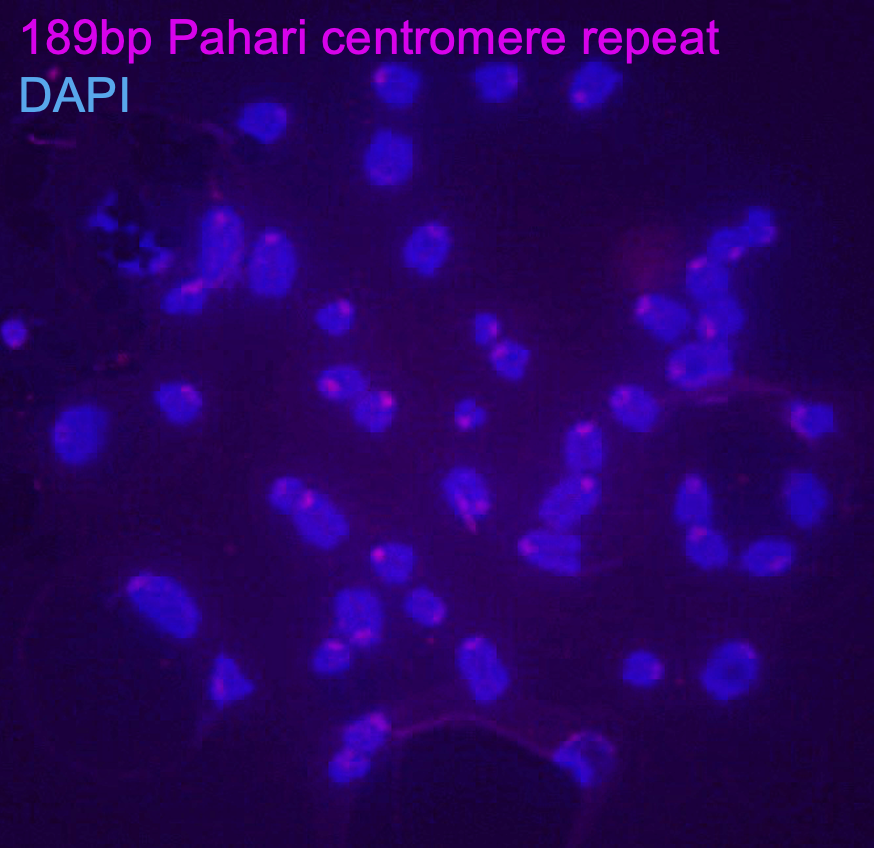
<p>Phenotypes for myeloid malignancies were curated using ICD-10/ICD-9 codes, self-reported diagnoses, and cancer histology codes, and then combined into a unified “myeloid megaphenotype” to enhance power. I performed association testing using REGENIE v3.2.5 with a gene-based collapsing framework incorporating both loss-of-function and deleterious missense variants. Covariates included age, sex, ancestry PCs, and technical batch effects. Genes with a minor allele count ≥20 were included, and results were corrected for multiple testing using the Benjamini-Hochberg procedure (FDR &lt; 0.05). These analyses enabled robust replication of key findings and extended the generalizability of rare variant signals across a much larger and more diverse UKB cohort.</p>

<p><a href="https://www.cell.com/cell/fulltext/S0092-8674(23)01348-X?_returnURL=https%3A%2F%2Flinkinghub.elsevier.com%2Fretrieve%2Fpii%2FS009286742301348X%3Fshowall%3Dtrue">Publication</a></p>]]></content><author><name>Uma Arora</name></author><category term="UK Biobank" /><category term="population genetics" /><category term="rare variant association" /><category term="manuscript editing" /><category term="addressing reviewer comments" /><summary type="html"><![CDATA[As part of efforts to validate rare variant associations identified in earlier analyses, I led the replication of gene-based association testing in the expanded UK Biobank (UKB) whole exome sequencing (WES) cohort comprising over 450,000 individuals. This analysis built upon prior findings and significantly increased statistical power. I re-processed and quality-controlled the population-level variant call format (pVCF) data, applying rigorous genotype- and sample-level filters in Hail, and restricting to rare variants (MAF &lt; 1%) with high-confidence deleterious annotations. Variant effect prediction was performed using multiple tools including LOFTEE, ALoFT, and InMeRF, the latter chosen based on its superior performance in classifying pathogenic missense variants (AUROC = 0.83).]]></summary></entry><entry><title type="html">Centromere Innovations Within A Mouse Species</title><link href="https://umaarora.github.io//centromere-innovations-within-a-mouse-species" rel="alternate" type="text/html" title="Centromere Innovations Within A Mouse Species" /><published>2023-11-15T00:00:00+00:00</published><updated>2023-11-15T00:00:00+00:00</updated><id>https://umaarora.github.io//centromere-innovations-within-a-mouse-species</id><content type="html" xml:base="https://umaarora.github.io//centromere-innovations-within-a-mouse-species"><![CDATA[<p>In performing the analysis to characterize the scope of variation at mouse centromeres, I wanted to investigate whether I could discover the previously unreported centromere repeat unit of the species Mus pahari. Taking the most frequent k-mers in this species, I assembled longer sequences that I hypothesized came from the centromere. I used the sequence constructed, synthesized probes, derived cell lines from Mus pahari, and tested my hypothesis using fluorescence in-situ hybridization.
<img src="../images/m-pahari-repeat-discovery.png" alt="Mus pahari centromere FISH" />
This reconstructed sequecne was localized to the centromere! We shortly learned that scientists in Dr. Ben Black’s lab at the University of Pennsylvania had also derived this sequence through CENP-A ChIP-seq in this species. Together, we forged a collaboration to dive into the evolutionary dynamics of Mus pahari centromeres.</p>

<p>Skills: mammalian cell culture, mitotic cell spreads, fluorescence in-situ hybridization, reference independent analysis, customized k-mer based analysis, centromere biology, external collaboration, manuscript editing</p>

<p><a href="https://doi.org/10.1016/10.1126/sciadv.adi5764">Publication</a></p>]]></content><author><name>Uma Arora</name></author><summary type="html"><![CDATA[In performing the analysis to characterize the scope of variation at mouse centromeres, I wanted to investigate whether I could discover the previously unreported centromere repeat unit of the species Mus pahari. Taking the most frequent k-mers in this species, I assembled longer sequences that I hypothesized came from the centromere. I used the sequence constructed, synthesized probes, derived cell lines from Mus pahari, and tested my hypothesis using fluorescence in-situ hybridization. This reconstructed sequecne was localized to the centromere! We shortly learned that scientists in Dr. Ben Black’s lab at the University of Pennsylvania had also derived this sequence through CENP-A ChIP-seq in this species. Together, we forged a collaboration to dive into the evolutionary dynamics of Mus pahari centromeres.]]></summary></entry><entry><title type="html">Variation In The Cenpa Sequence Association Landscape Across Diverse Inbred Mouse Strains</title><link href="https://umaarora.github.io//variation-in-the-cenpa-sequence-association-landscape-across-diverse-inbred-mouse-strains" rel="alternate" type="text/html" title="Variation In The Cenpa Sequence Association Landscape Across Diverse Inbred Mouse Strains" /><published>2023-10-31T00:00:00+00:00</published><updated>2023-10-31T00:00:00+00:00</updated><id>https://umaarora.github.io//variation-in-the-cenpa-sequence-association-landscape-across-diverse-inbred-mouse-strains</id><content type="html" xml:base="https://umaarora.github.io//variation-in-the-cenpa-sequence-association-landscape-across-diverse-inbred-mouse-strains"><![CDATA[<p>Performed reference-independent, customized k-mer based analyses to characterize the differences in CENP-A sequence association landscape across diverse inbred strains.</p>

<p>Skills: ChIP-seq, ChIP-seq data analysis, Publicly available ChIP-seq data analysis (SRA), machine learning (dimensionality reduction), phylogenomics, reference independent analysis, customized k-mer based analysis, centromere biology, collaboration, manuscript writing and editing</p>

<p><a href="https://doi.org/10.1016/j.celrep.2023.113178">Publication</a></p>

<p><a href="https://github.com/umaarora/CENPA-ChIP">Github repository</a></p>]]></content><author><name>Uma Arora</name></author><category term="ChIP-seq" /><category term="ChIP-seq data analysis" /><category term="Publicly available ChIP-seq data analysis (SRA)" /><category term="dimensionality reduction" /><category term="phylogenomics" /><category term="customized k-mer based analysis" /><category term="centromere biology" /><category term="collaboration" /><category term="manuscript writing editing publishing" /><summary type="html"><![CDATA[Performed reference-independent, customized k-mer based analyses to characterize the differences in CENP-A sequence association landscape across diverse inbred strains.]]></summary></entry><entry><title type="html">Selection Shapes The Landscape Of Functional Variation In Wild Mice</title><link href="https://umaarora.github.io//selection-shapes-the-landscape-of-functional-variation-in-wild-mice" rel="alternate" type="text/html" title="Selection Shapes The Landscape Of Functional Variation In Wild Mice" /><published>2021-11-19T00:00:00+00:00</published><updated>2021-11-19T00:00:00+00:00</updated><id>https://umaarora.github.io//selection-shapes-the-landscape-of-functional-variation-in-wild-mice</id><content type="html" xml:base="https://umaarora.github.io//selection-shapes-the-landscape-of-functional-variation-in-wild-mice"><![CDATA[<p>Performed differential gene expression analysis.</p>

<p>Skills: bulk RNA-seq analysis, collaboration, manuscript editing</p>

<p><a href="https://doi.org/10.1186/s12915-021-01165-3">Publication</a></p>]]></content><author><name>Uma Arora</name></author><summary type="html"><![CDATA[Performed differential gene expression analysis.]]></summary></entry><entry><title type="html">Population And Subspecies Diversity At Mouse Centromeres</title><link href="https://umaarora.github.io//population-and-subspecies-diversity-at-mouse-centromeres" rel="alternate" type="text/html" title="Population And Subspecies Diversity At Mouse Centromeres" /><published>2021-04-17T00:00:00+00:00</published><updated>2021-04-17T00:00:00+00:00</updated><id>https://umaarora.github.io//population-and-subspecies-diversity-at-mouse-centromeres</id><content type="html" xml:base="https://umaarora.github.io//population-and-subspecies-diversity-at-mouse-centromeres"><![CDATA[<p>My first research project during my PhD in the <a href="https://www.jax.org/research-and-faculty/research-labs/the-dumont-lab">Dumont Lab</a> was to use whole genome sequencing data from a diversity of inbred mouse strains and characterize genetic variation of a region of the genome that was absent in the reference genome assembly - the centromere.
Continue description…</p>

<p><a href="https://github.com/umaarora/KmerDigging">Github repository</a></p>

<p><a href="https://doi.org/10.1186/s12864-021-07591-5">Publication</a></p>]]></content><author><name>Uma Arora</name></author><category term="k-mer based methods" /><category term="computational biology" /><category term="frequentist statistics" /><category term="phylogenetic modeling" /><category term="HPC cluster" /><category term="whole genome sequencing data analysis" /><category term="mammalian cell culture" /><category term="fluorescence in-situ hybridization" /><category term="manuscript writing" /><category term="editing" /><category term="and publishing" /><summary type="html"><![CDATA[My first research project during my PhD in the Dumont Lab was to use whole genome sequencing data from a diversity of inbred mouse strains and characterize genetic variation of a region of the genome that was absent in the reference genome assembly - the centromere. Continue description…]]></summary></entry><entry><title type="html">Porphyrin Production And Regulation In Cutaneous Propionibacteria</title><link href="https://umaarora.github.io//porphyrin-production-and-regulation-in-cutaneous-propionibacteria" rel="alternate" type="text/html" title="Porphyrin Production And Regulation In Cutaneous Propionibacteria" /><published>2020-01-15T00:00:00+00:00</published><updated>2020-01-15T00:00:00+00:00</updated><id>https://umaarora.github.io//porphyrin-production-and-regulation-in-cutaneous-propionibacteria</id><content type="html" xml:base="https://umaarora.github.io//porphyrin-production-and-regulation-in-cutaneous-propionibacteria"><![CDATA[<p>Shortly after graduating from UCLA, I was a research assistant in <a href="https://pharmacology.ucla.edu/people/huiying-li">Dr. Huiying Li’s</a> lab in the Molecular and Medical Pharmacolody Department at UCLA working on skin microbiome research.</p>

<p>I worked on a project investigating phenotypic variation in the production of a proinflammatory molecule (porphyrin) across strains of Propionibacterium acnes, the dominant resident skin bacterium. I performed an experiment to test the effect of vitamin B12 presence on porphyrin production levels by various strains of P. acnes and other Propionibacterium species. I cultured various P. acne type I, type II, and type III strain lines and other Propionibacterium species isolated from human skin samples. Bacteria were seeded, supplemented with a range of vitamin B 12 concentrations, and grown for 14 days. After 14 days, porphyrin was extracted, and levels measured. I analyzed the data I generated and found acne-associated type I strains produced higher levels of porphyrins than did health-associated type II and type III strains. In addition, vitamin B 12 supplementation stimulated an increased porphyrin production in acne associated type I strains compared to health-associated strains. The findings from this research reveal details regarding the pro-inflammatory potential of the skin microbiota and can be used as a guide to develop effective acne treatments by modulating bacterial community composition and metabolism in the skin microbiota.</p>

<p>Skills: molecular biology, bacterial culture, manuscript writing and editing</p>

<p><a href="https://doi.org/10.1128/msphere.00793-19">Publication</a></p>]]></content><author><name>Uma Arora</name></author><category term="molecular biology" /><category term="bacterial culture" /><category term="manuscript writing and editing" /><summary type="html"><![CDATA[Shortly after graduating from UCLA, I was a research assistant in Dr. Huiying Li’s lab in the Molecular and Medical Pharmacolody Department at UCLA working on skin microbiome research.]]></summary></entry></feed>